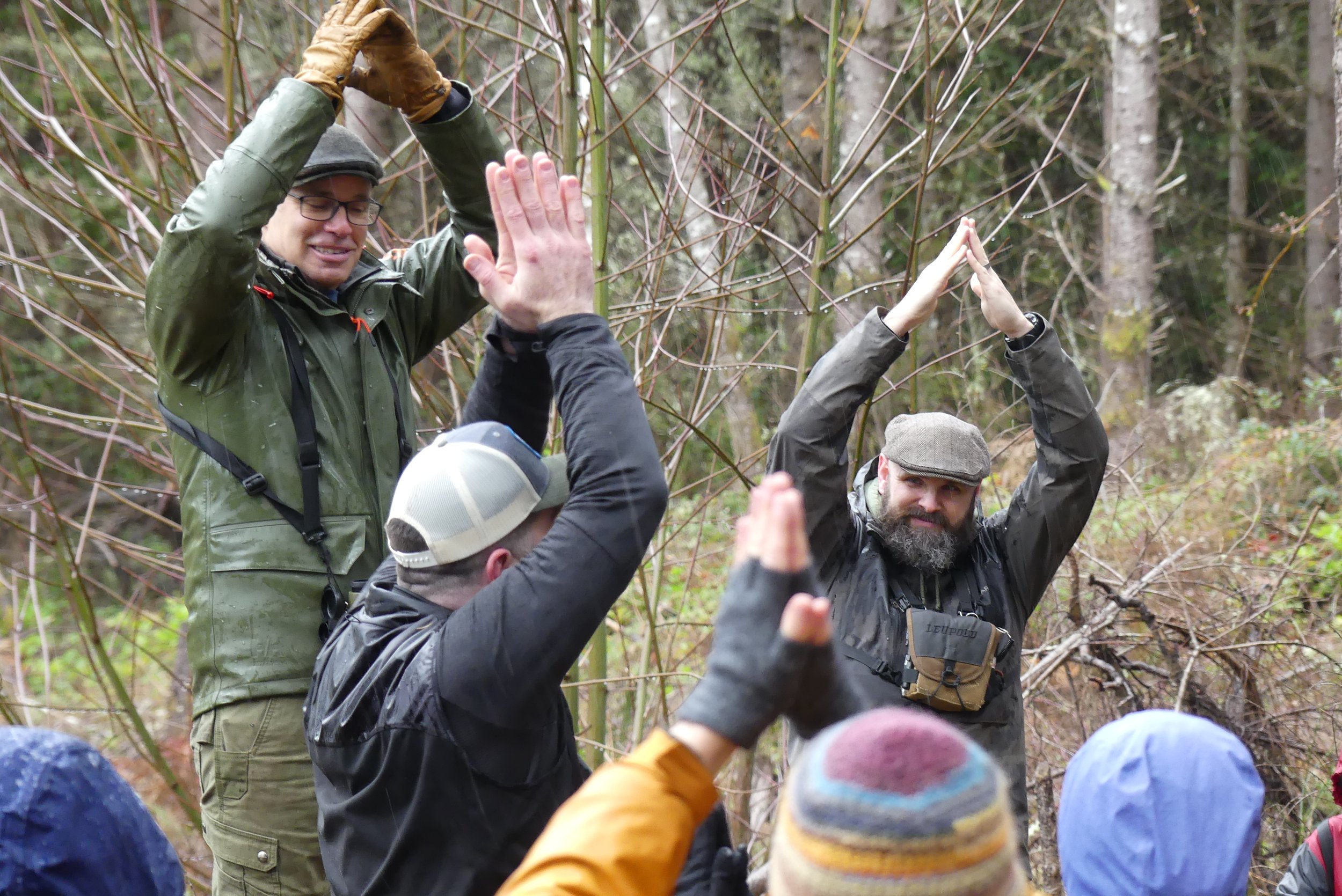
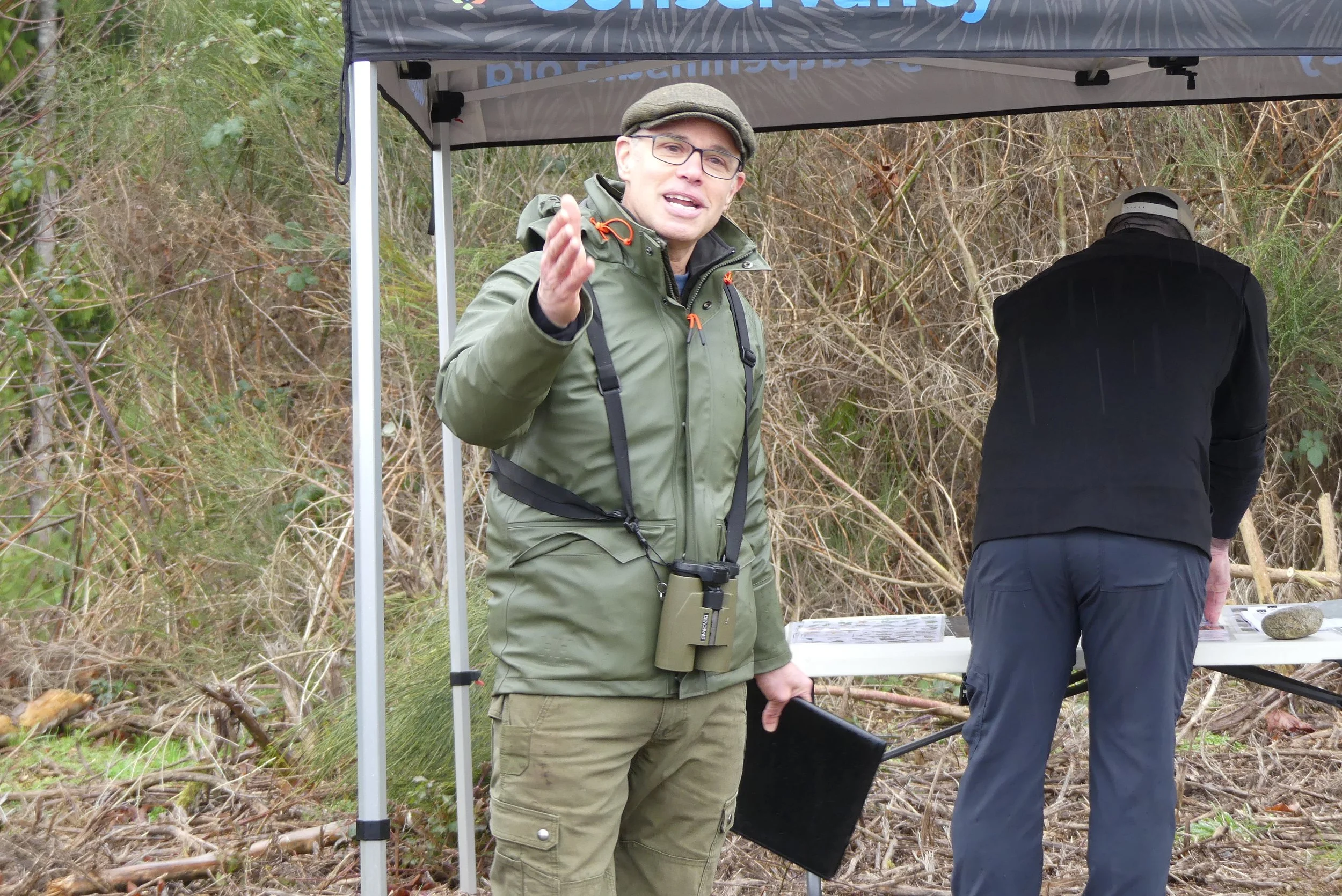
Deep in the heart of the Kitsap Peninsula, the morning mist often hangs heavy over the towering hemlocks and Sitka spruce of Grovers Creek Preserve. But on a recent Saturday, the quiet of the woods was replaced by the enthusiastic chatter of birders, conservationists, curious neighbors, and the usual sounds of raindrops hitting our heads.
Great Peninsula Conservancy (GPC) recently hosted a "Walk and Talk" at Grovers Creek, bringing together a team of experts and nearly 30 community members to explore the vital intersection of forest management and bird conservation.
A Meeting of Minds at Grovers Creek
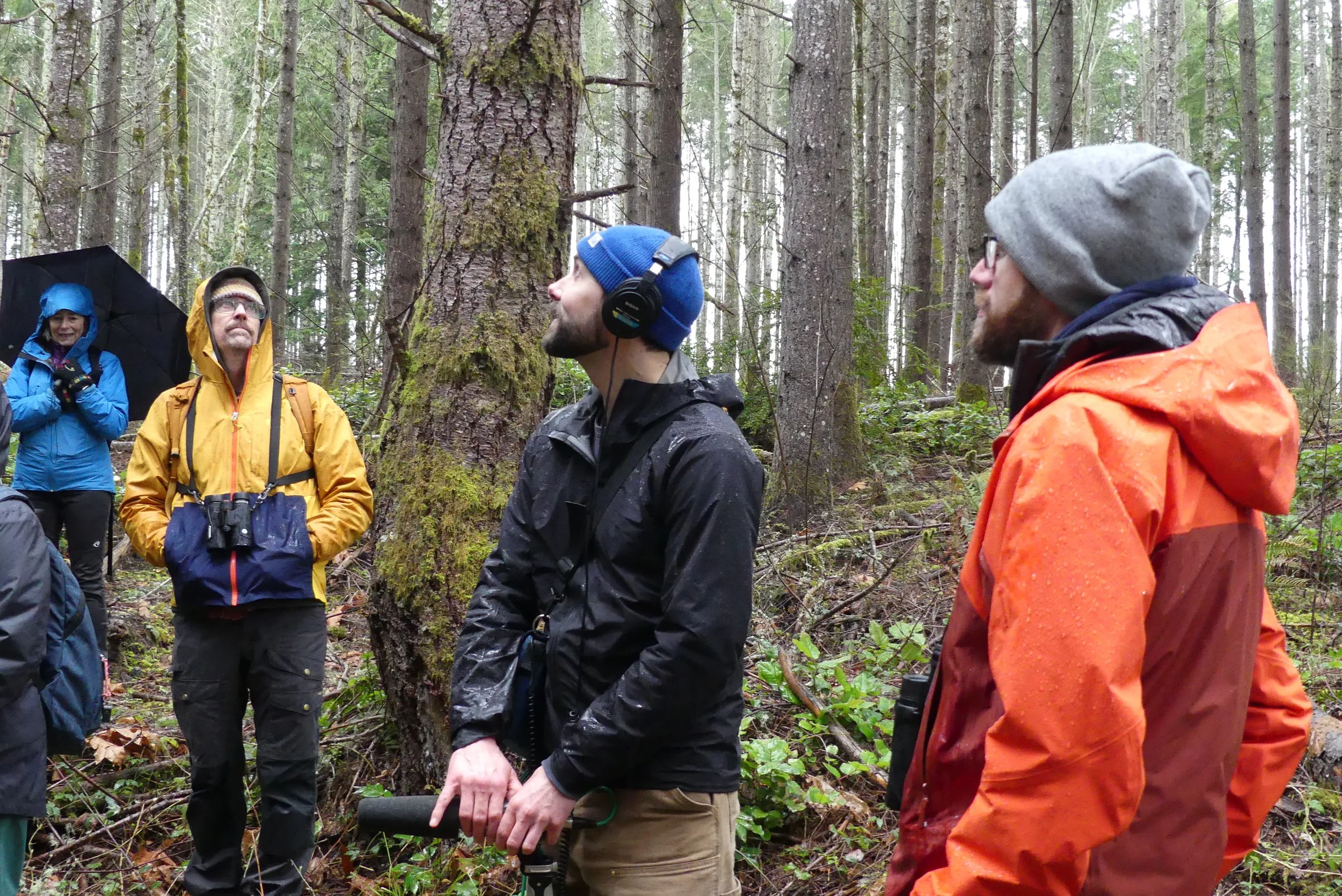
The event featured leaders in the local conservation scene. Three members of the Kitsap Audubon Society—Kevin Eyer, Colin Tierney, and Justin Carrington—lent their experience, ears, and eyes to the group. They were joined by GPC’s own stewardship heavyweights, Adrian Wolf and Gabriel Newton, alongside Communications Director Samantha Hale and Communications & Outreach Fellow Gina Parker.
The goal? To see firsthand how GPC is transforming this former working timberland into a resilient, complex ecosystem that serves as a sanctuary for wildlife.
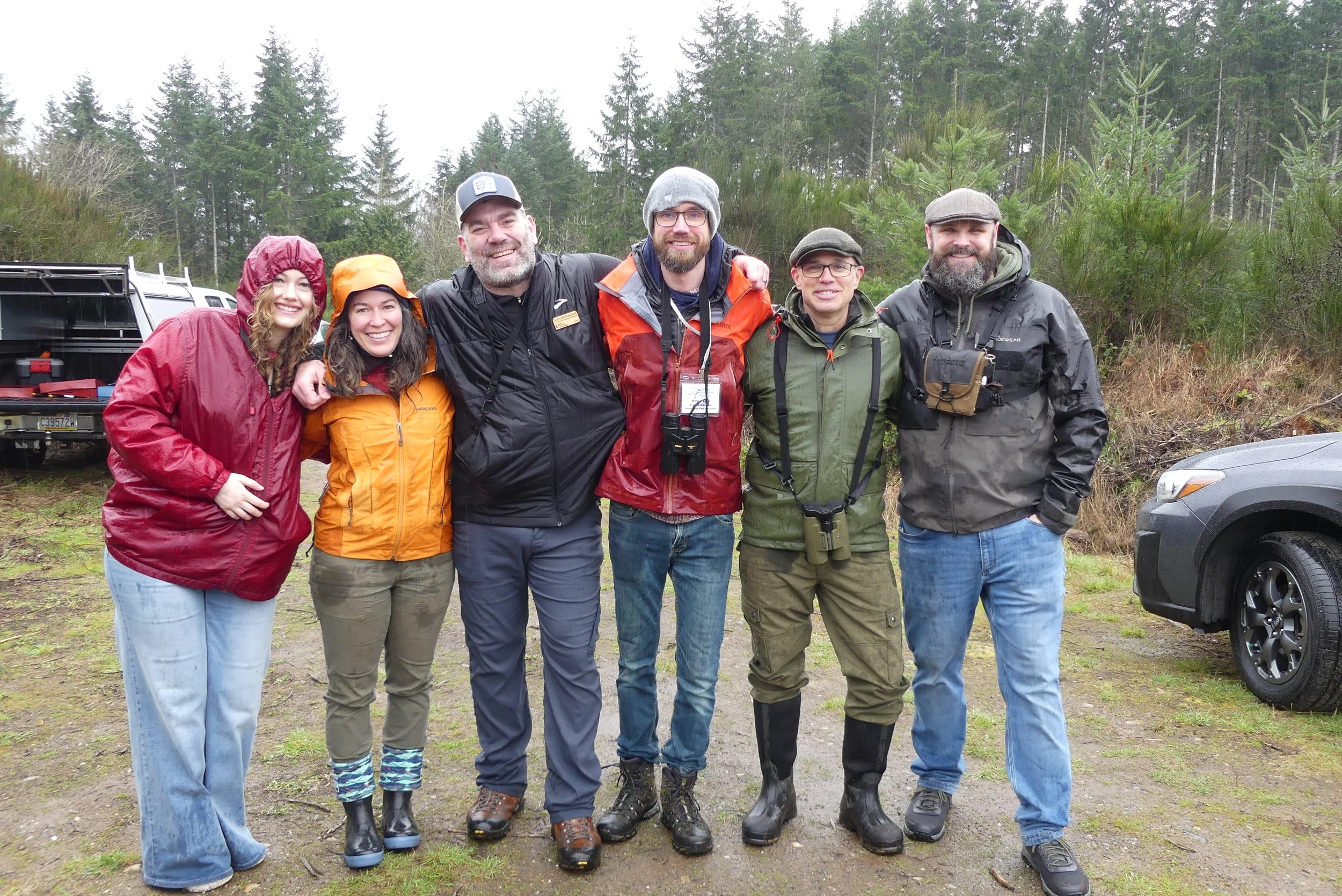
Local conservation leaders
Turning Up the Volume: The "Listen Up" Collaborative
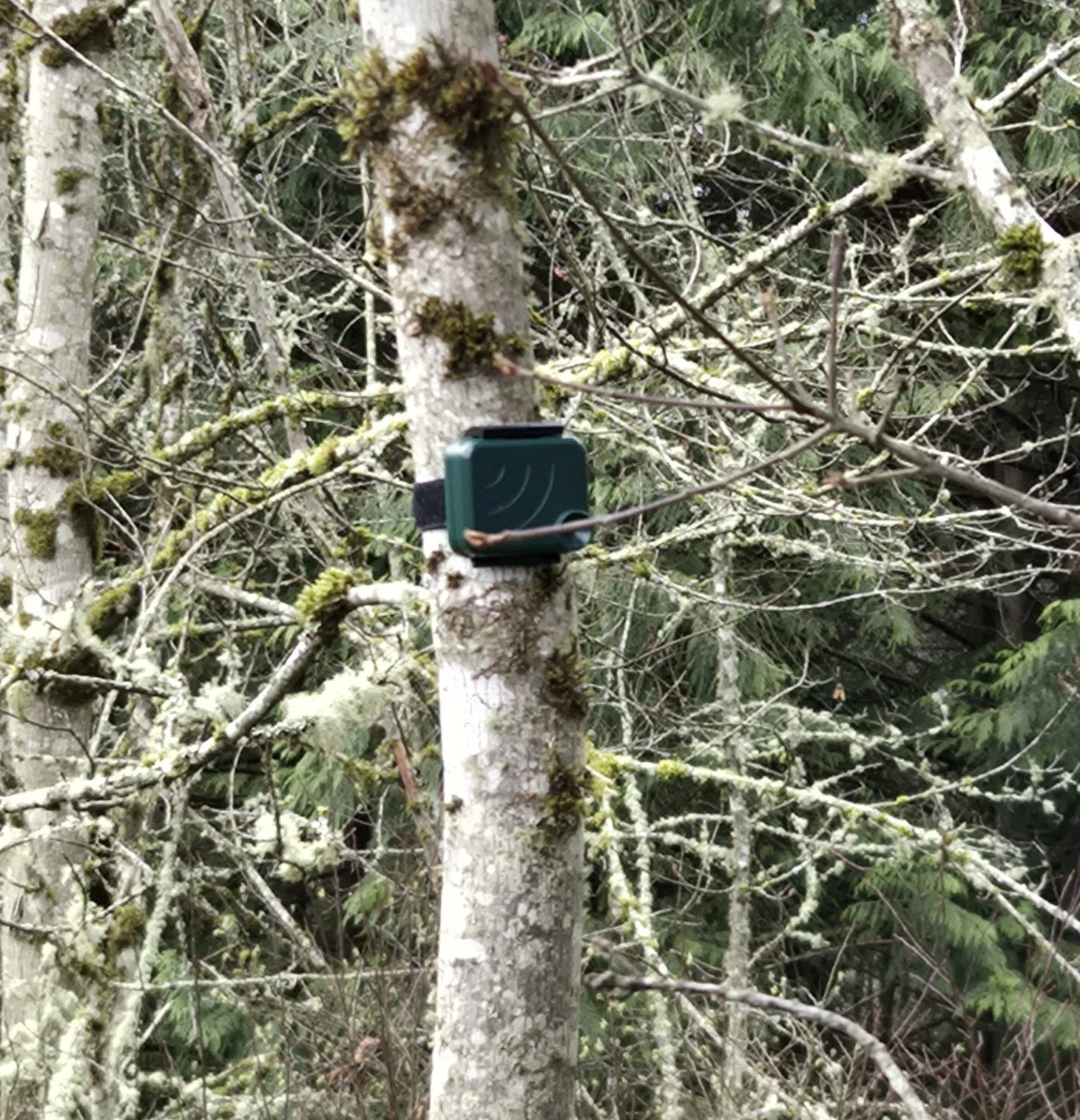
One of the most exciting topics of the day was the Listen Up Collaborative. This pioneering partnership (which includes GPC, Jefferson Land Trust, Bainbridge Island Land Trust, and several tribal and conservation organizations) is using state-of-the-art technology to "listen" to the forest.
By deploying small acoustic recording devices called AudioMoths, the collaborative captures hundreds of thousands of minutes of birdsong. This isn't just for the joy of hearing a Swainson’s Thrush; it’s hard science. By monitoring which birds are present and how their populations change, the collaborative can measure exactly how effective their habitat restoration efforts are. It’s a way of letting the birds themselves tell us if we’re getting the forest management right.
The Bird’s-Eye View: Why Management Matters
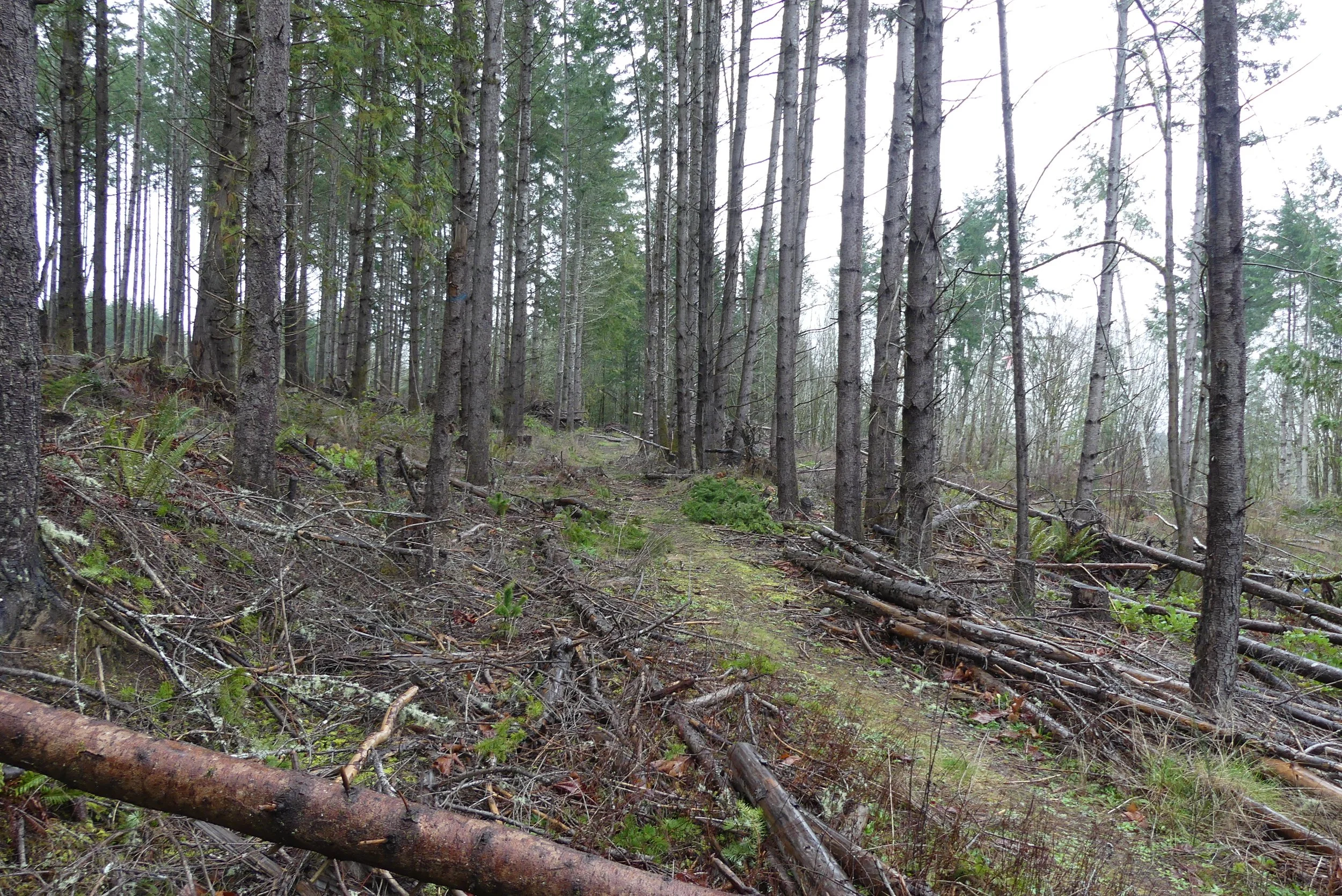
During the walk, the conversation turned to the "how" of forest restoration. To a casual observer, a dense thicket of trees looks like a "forest," but to a bird, it can be a desert. Many areas of Grovers Creek were historically managed for timber, resulting in "overstocked" stands where trees are packed so tightly that they choke out the sunlight.
The Impact of Clear-Cutting: A Total Reset
Historically, many industrial forests were managed through clear-cutting—the removal of every tree in a designated area. For birds, this is a catastrophic "reset button."
Loss of the Vertical Home: Most birds don't just live "in a tree"; they live in specific "layers" (the canopy, the mid-story, or the shrub layer). Clear-cutting destroys this vertical real-time real estate, forcing canopy-dwelling species like Golden-crowned Kinglets or Western Tanagers to abandon the site entirely.
The "Silent" Gap: While some "edge" species (like Towhees) might visit the clearing, the specialized interior-forest birds lose their nesting sites and protection from predators. It can take decades for a clear-cut to regain the structural complexity needed to support a diverse bird population.
Temperature and Exposure: Without the cooling shade of the canopy, the ground heats up and dries out, killing off the insects and larvae that serve as the primary food source for nesting birds.
Ecological Thinning: Building a Custom Aviary
GPC is taking a different approach: strategic thinning. By carefully selecting and removing specific trees, the stewardship team acts as an architect for bird habitat.
Creating "Light Gaps": Thinning mimics the natural falling of an old tree. It allows sunlight to hit the forest floor, triggering the growth of salmonberry, elderberry, and huckleberry. This "understory" provides critical nesting cover for Pacific Wrens and a seasonal buffet of berries and insects.
The High-Rise Strategy: By removing "suppressed" trees, the remaining trees grow thicker and develop the massive horizontal branches that Marbled Murrelets or Owls require for nesting.
Recycling Resources (Snags and Logs): Rather than hauling all the wood away, GPC often "girdles" thinned trees to create standing dead wood (snags). These become "high-rise apartments" for cavity-nesters like Pileated Woodpeckers and Chickadees. Meanwhile, logs left on the forest floor provide damp, mossy hunting grounds for ground-foraging birds.
By thinning the forest today, we aren't just growing bigger trees; we are intentionally crafting the specific nooks, crannies, and food sources that allow our local bird populations to thrive for the next century.
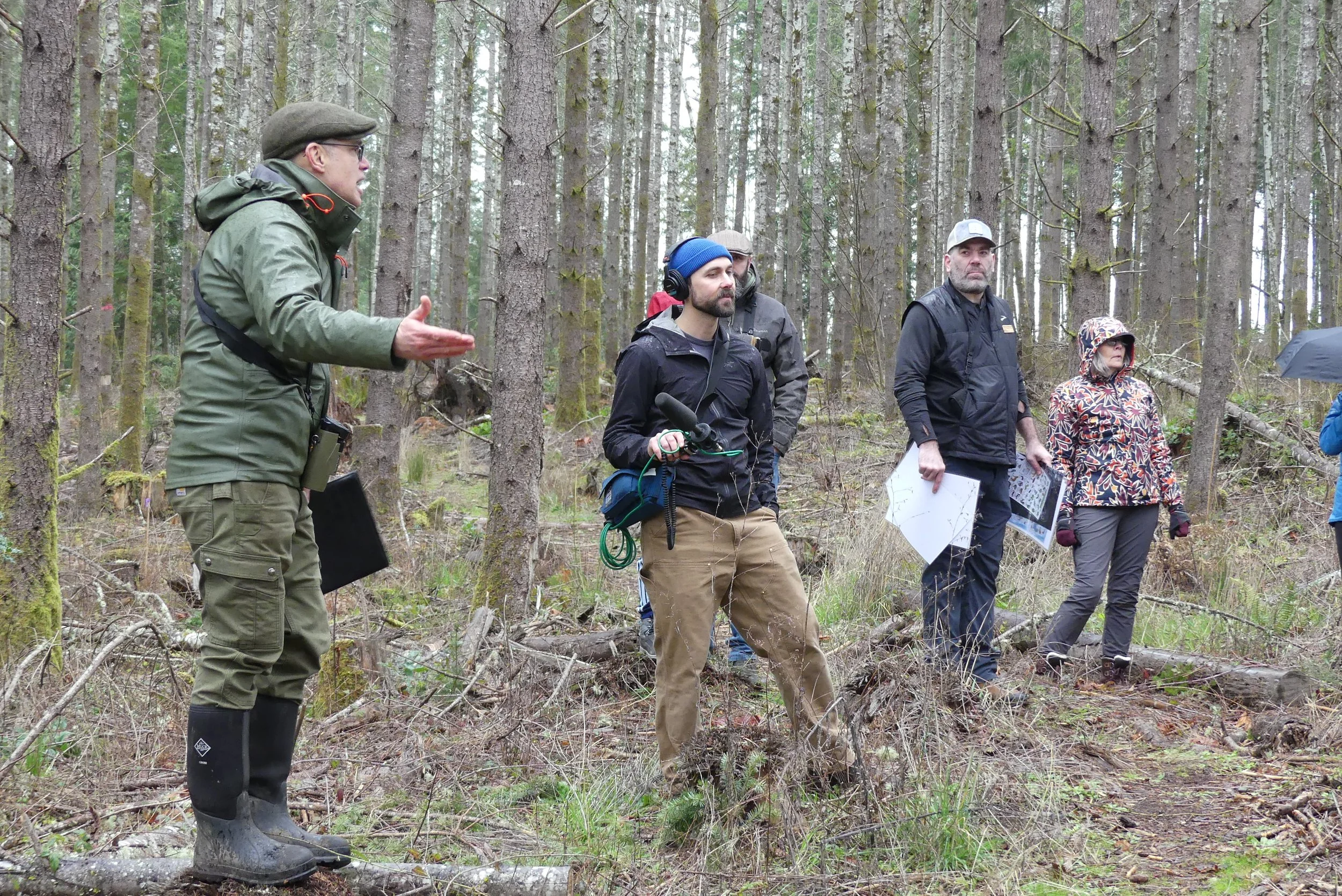
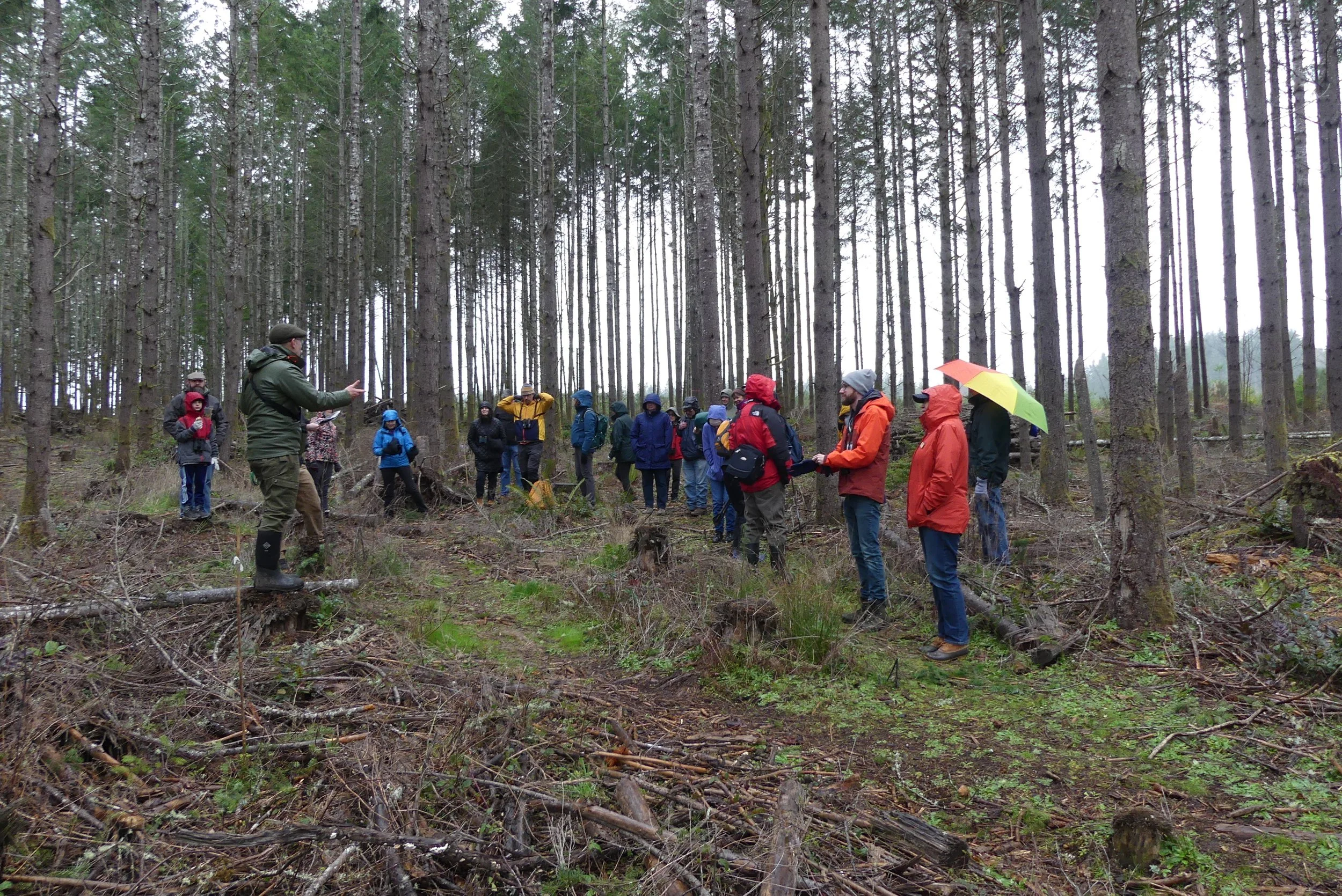
Adrian Wolf talking about the GPC stewardship efforts at Grover’s creek
A Legacy in the Making
As the group wound its way past 200-year-old Sitka spruce and vibrant peat bogs, the message was clear: conservation is an active process. Thanks to the expertise of the Kitsap Audubon Society and the data-driven approach of the Listen Up Collaborative, Grovers Creek Preserve is becoming more than just a piece of land—it’s a living laboratory for how we can help our forests (and our feathered friends) thrive in a changing climate.
Want to get involved? Visit Great Peninsula Conservancy to learn about upcoming walks, or join the Kitsap Audubon Society to sharpen your birding skills!