Climate Watch: Counting our Winter Birds
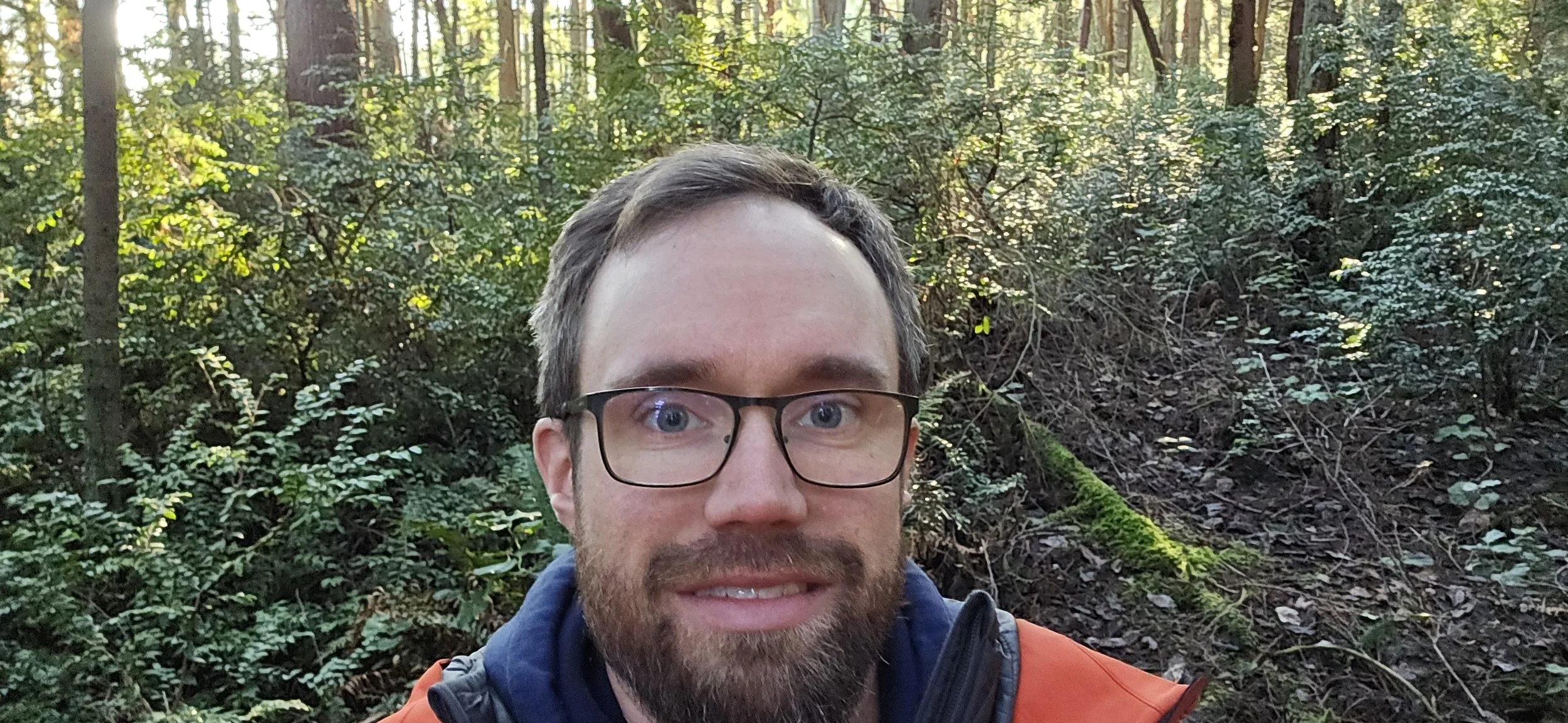
Post by VP Kevin Eyer
It was a crisp but quiet morning for Climate Watch today. Each year, two counts are conducted—one between January 15 and February 15, and another between May 15 and June 15—across survey squares throughout the nation as part of a collective effort to understand how birds respond to climate change. I always look forward to spring, when things warm up and the birds are all shouting their seasonal chorus, but winter has its perks. Nothing beats the golden sunlight of a low southern sun striking tree trunks and casting a soft glow on the ferns. You just can’t get the same effect in spring.
The National Audubon Society launched this survey in 2016 (learn more here: https://www.audubon.org/community-science/climate-watch), and Kitsap Audubon Society—under the leadership of Jennifer Standish—has been an active contributor for most, if not all, of that time. I joined the effort in 2021. There are a few key parameters for the survey. To avoid double-counting, each point count must be at least 200 meters from any other point, and the location should be an area where target birds have established territory. That’s a lot of contiguous forest to ask for in busy Kitsap suburbia—unless you’re moving between fragments of remaining habitat. I split my count with Jennifer, who surveys the opposite side of the water within our square, and together we achieve solid coverage.
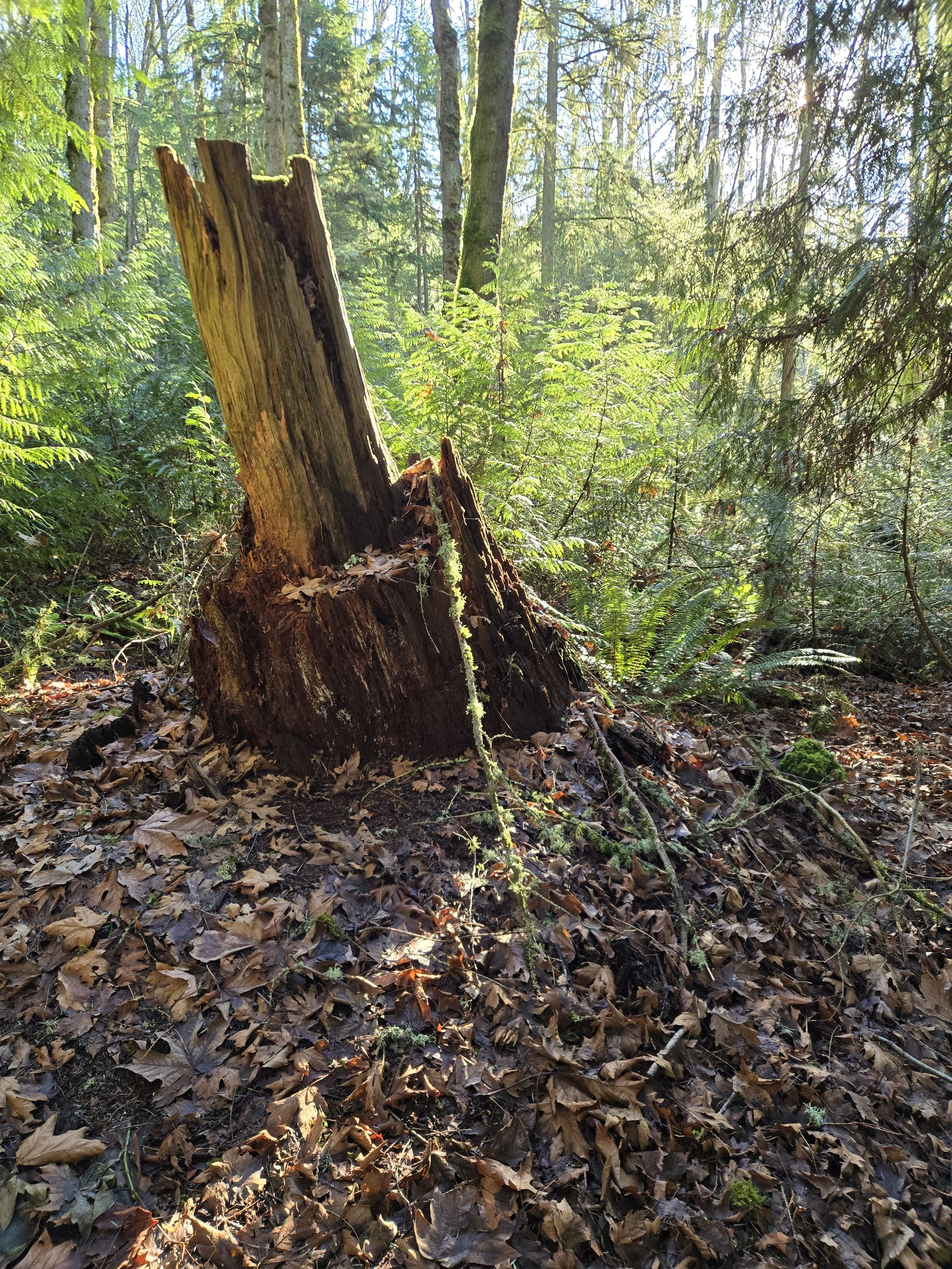
Nothing beats the dappled sunlight of Illahee Preserve. The snags—thousands of standing dead trees riddled with woodpecker holes—provide excellent habitat for a wide variety of woodland creatures. Birding at Illahee is beautiful but tricky. With so many young trees growing close together, there are few open sightlines, so much of the birding must be done by ear rather than by sight. Illahee is a powerful example of how community members can come together to preserve habitat, even within suburbia. I am deeply grateful for the efforts of leaders at the East Bremerton Rotary, former Kitsap Audubon chair Vic Ulsch, and his conservation partner Jim Aho. With support from Rotary and Kitsap County Parks, this preserve has become a green oasis for East Bremerton, and work continues to improve and maintain its accessibility.
One challenge of birding these woods is that they don’t fully shut out the sounds of traffic, and I’m sure I miss bird calls every time I visit. Today’s count included many familiar species: Pacific Wrens, my favorite winter singers with their beautiful long trills; Golden-crowned Kinglets and Brown Creepers with their soft, high-pitched calls; Spotted Towhees with their raucous shouts; and Red-breasted Nuthatches, whose insistent calls remind me more of a duck than a delicate passerine. How important it is that we protect these spaces and continue to monitor their health. Every moment on the trail is precious to me. I hope you’re able to get out and enjoy it too. Happy birding!